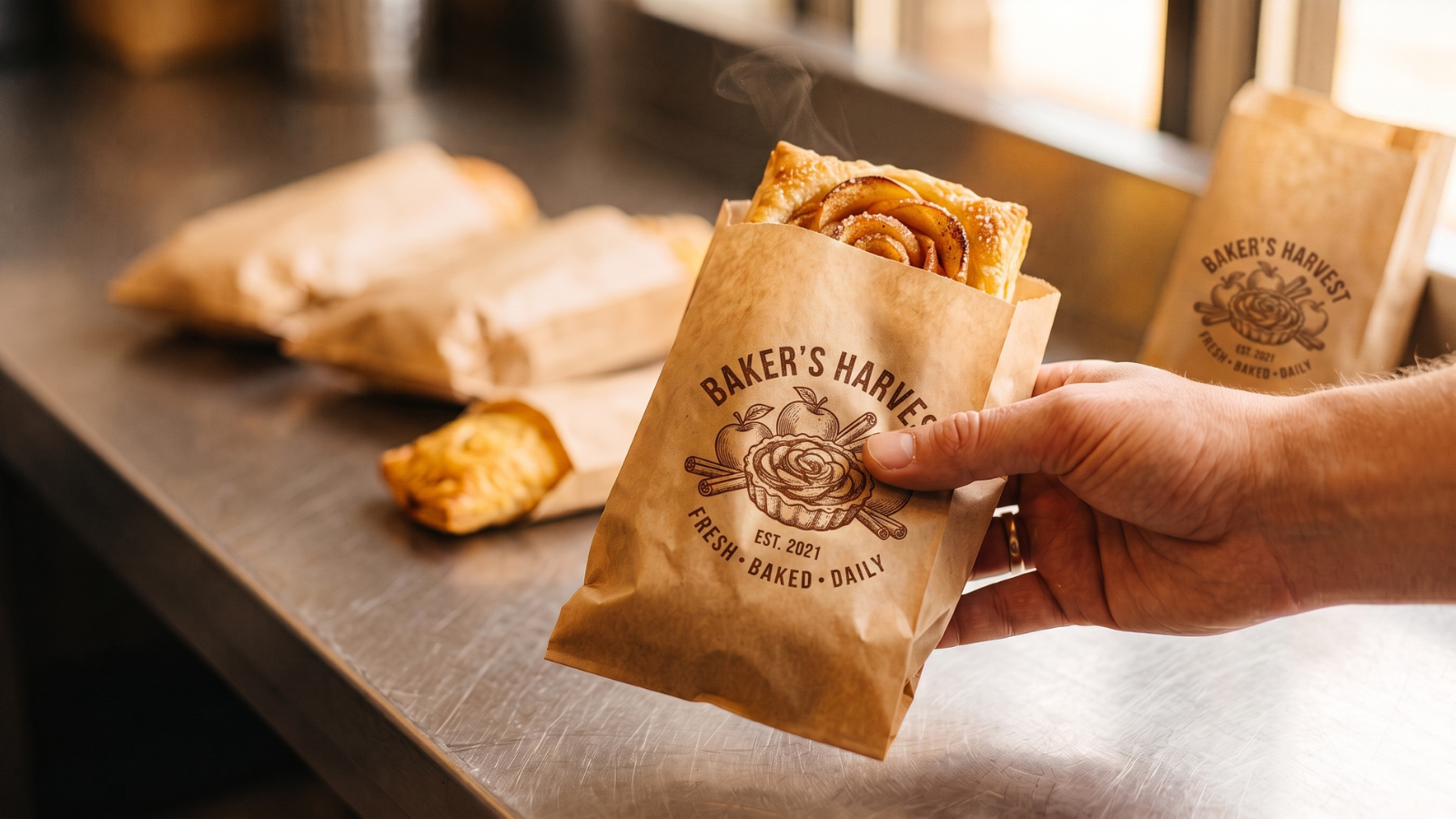
The lunch rush is fifteen minutes old, and the hot case is already telling two different stories. Chicken tenders sit under the lamps, golden and ready. Behind closed glass on the lower shelf, egg rolls hold temperature but stay invisible to anyone who isn't looking for them.
The operator notices. There's a line at the register, so the display stays as it is.
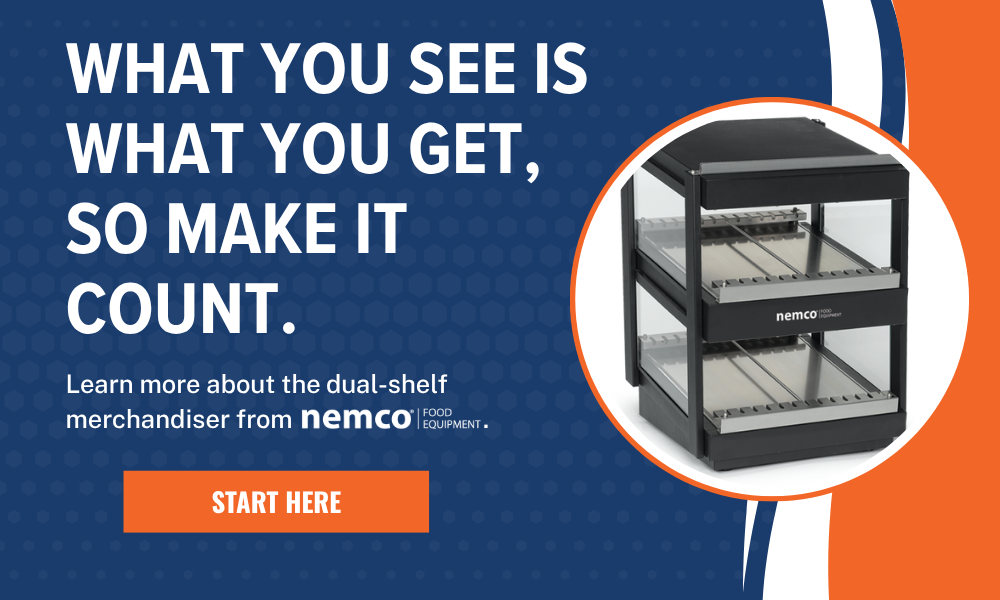
That quiet compromise, visibility against hold quality against customer access, has shaped hot food programs for so long that most operators stopped questioning it. Nemco's Dual Shelf Merchandiser was built to remove it.
Why Traditional Hot Holding Forces a Compromise
Heat lamps keep food visible but dry it out within the hour. Enclosed holding cabinets preserve moisture and temperature but hide the product behind doors, turning an impulse purchase into something a customer has to ask for. Open cases split the difference but rarely hold quality long enough to survive a full service window without restocking.
Every option trades one advantage for the other two. Operators adapt by rotating stock more frequently, over-batching to keep cases full, or narrowing their hot menus to whatever holds best. The trade-off becomes the program.
How Open-Access Design and Dual-Zone Heating Solve the Trade-Off
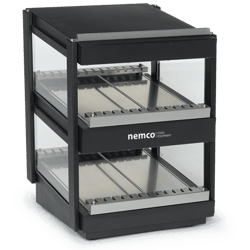 The Dual Shelf Merchandiser was designed around a different premise: operators should not have to choose.
Each shelf features dual independent heating elements with independent thermostats, and the element design eliminates cold spots across the full surface. Tempered glass sides keep the product visible from multiple angles. Adjustable divider rods keep items organized across the shelf. The slanted, open-access layout puts food within arm's reach. No doors to open, no staff to retrieve it.
The result is a merchandiser that holds serving temperature across the full shelf while the customer sees the product and grabs it without friction. One fixture handles what used to require a compromise.
How Extended Hold Quality Reduces Labor Pressure and Waste
When food quality holds longer, two operational costs drop in parallel.
The first is labor. Traditional hot holding requires frequent rotation. Operators check temperatures, pull product that has dried or discolored, and restock to keep the display full. Each cycle pulls an employee from the register, the prep station, or the customer. A merchandiser that maintains consistent, even heat across both shelves extends the window between those interventions.
The second is waste. Product that degrades visually gets pulled whether or not it is still safe to serve. Operators running heat lamps through a slow stretch know the math: food that looked ready at 11:30 becomes a throwaway by noon. Longer quality hold means less product in the trash and more of it in a customer's hands.
This is what Nemco's equipment has always been designed to do: remove a step. Here, the step was the trade-off itself.
Why Open-Access Heated Merchandising Matters More Today
Two trends have made this category of equipment more operationally urgent.
The first is labor. Fewer staff members covering more tasks means any piece of equipment that requires babysitting creates a bottleneck. A merchandiser that holds quality through a full service window without intervention gives that labor back to the counter, the prep line, or the customer.
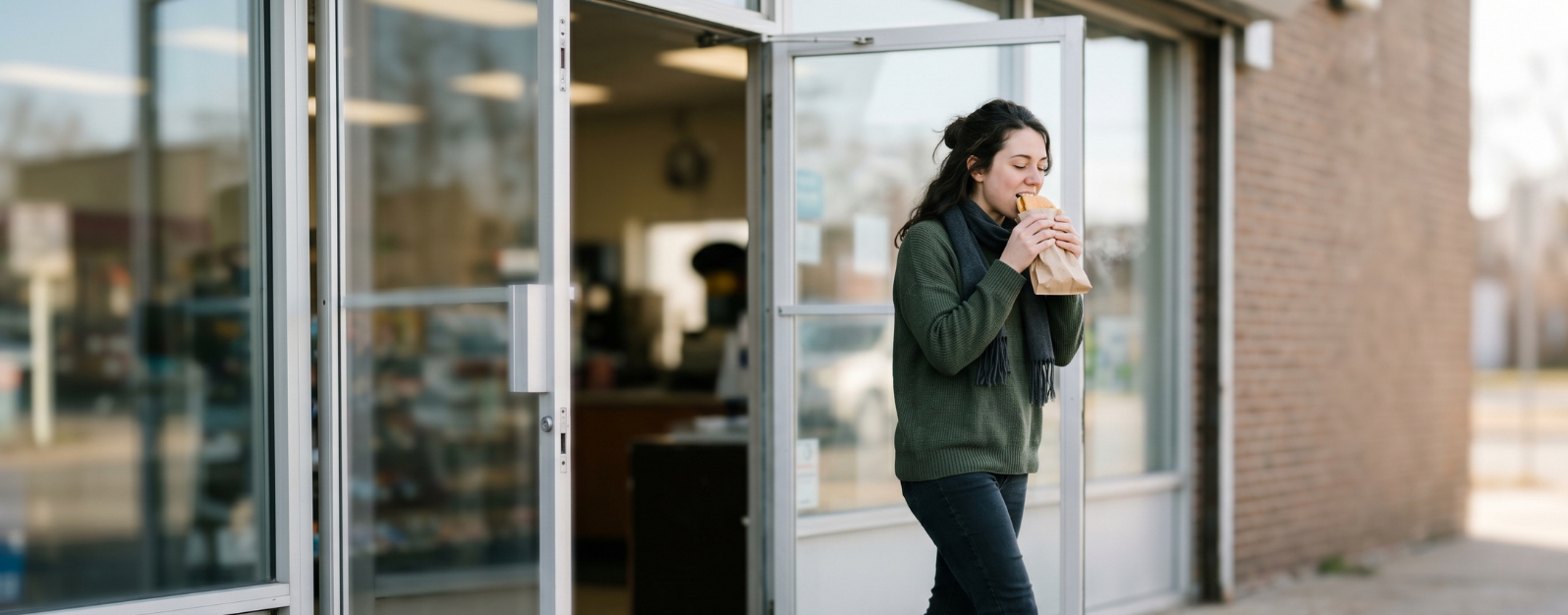
The second is demand. Grab-and-go foodservice has expanded from convenience stores into campuses, healthcare facilities, arenas, and corporate cafeterias. Counter space drives that growth, and every new program needs a hot display that earns the impulse purchase with smaller teams than operators originally planned for.
[Additional Reading: For the full story of how Nemco's heated merchandising line evolved over five decades, read the companion retrospective.]
Frequently Asked Questions About Hot Food Merchandisers
What is a heated merchandiser?
A heated merchandiser is a countertop display unit designed to keep prepared food at serving temperature while making it visible and accessible to customers. Open-access models let customers grab food directly without staff assistance.
How long can hot food safely be held in a heated display?
The FDA Food Code requires hot-held food to remain at or above 135°F. Practical hold times depend on the equipment's ability to maintain even temperature across the display surface. Equipment with independent zone heating and cold-spot elimination extends those windows.
What are the benefits of open-access food merchandising?
Open-access displays remove the barrier between customer and product. Food is visible, reachable, and ready, which supports impulse purchasing and reduces the need for staff to serve or retrieve items.
How do heated merchandisers help reduce food waste?
Even, consistent heat keeps food looking and tasting ready for longer periods. Less visual degradation means fewer premature pulls and less product discarded before the service window closes.
What types of businesses use heated display shelves?
Convenience stores, stadium and arena concessions, college and university dining, healthcare cafeterias, quick-service restaurants, and any operation running a grab-and-go hot food program.
Why is visibility important in grab-and-go foodservice?
Grab-and-go purchasing is driven by what customers see. Food behind closed doors or below a counter does not trigger the impulse buy. Visible, well-lit, accessible product does.
Nemco's Dual Shelf Merchandiser is built to hold serving-temperature quality across an extended window with open access, dual-zone heating, and a footprint designed for the counter. Explore the Dual Shelf Merchandiser today to learn more.