/nemco-logo.png)
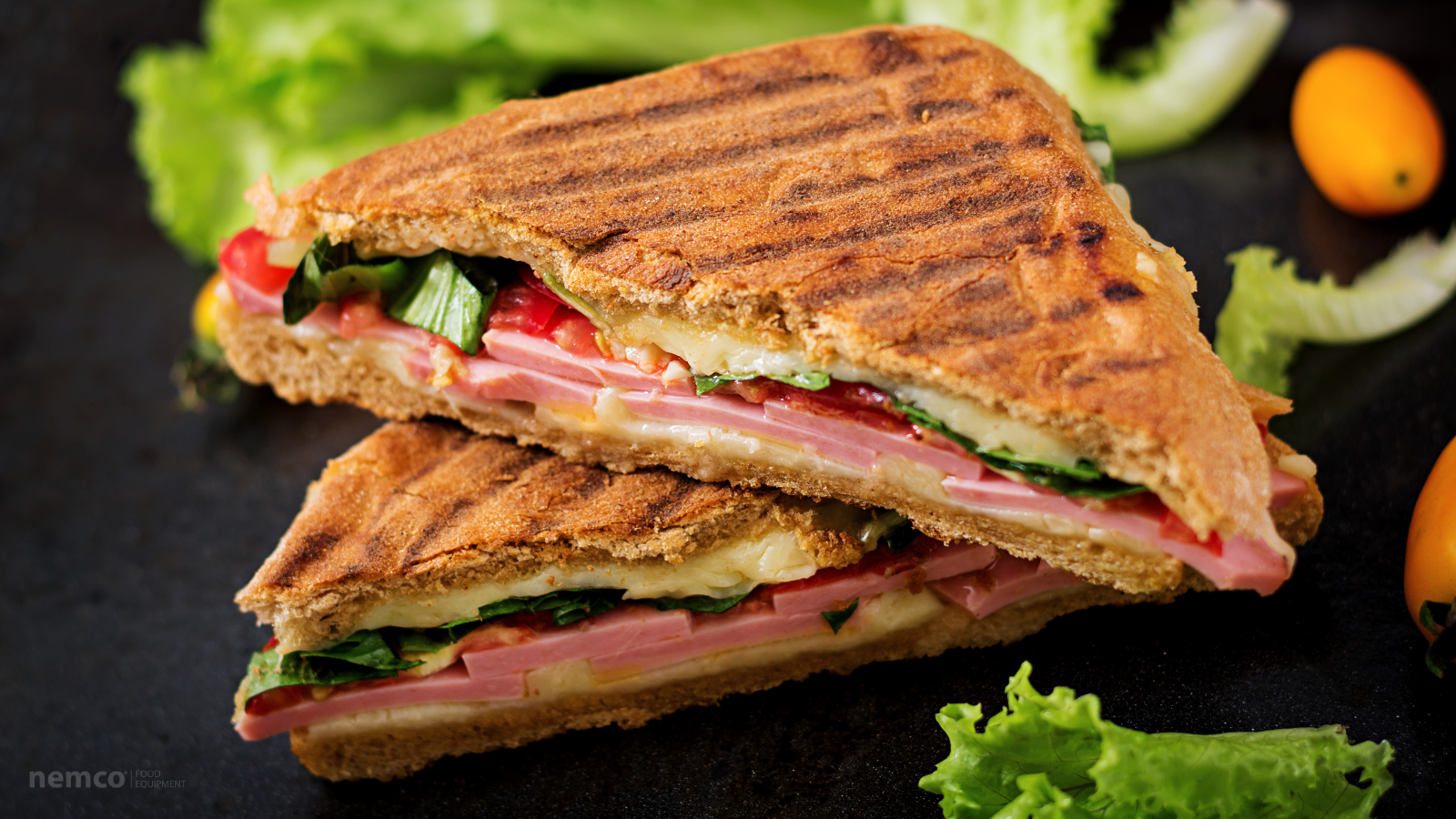
Before the PaniniPro™, a hot panini meant a sequence. Cold protein went into a separate heater. The press came next. Then assembly, packaging, and out the window. Four or five touches for a single sandwich, each one adding seconds to a ticket and square footage to a counter.
Nemco saw it the way we always have: as steps that did not need to exist.
How Sandwich Speed Became a Real Operational Pressure
Grab-and-go programs changed what operators could sell. Made-to-order menus changed what customers expected. Both created the same problem: hot, pressed sandwiches needed to come out faster without adding labor or complexity. In c-store and quick-service environments, especially, a slow press ties up the station and the worker running it. The real pressure was throughput: how many sandwiches per hour, per square foot, per person on shift.
What Multi-Step Panini Prep Actually Costs
The traditional workflow split the job across multiple pieces of equipment. A microwave or conveyor heated the protein. A contact grill pressed the bread. In between, operators transferred the product, managed timing on two separate units, and made judgment calls about doneness at each stage.
The costs showed up in four places. Ticket times stretched. Footprint expanded, because two units required counter space and a dedicated power drop each. Results varied shift to shift because the process depended on individual judgment rather than a programmed cycle. And during rush periods, the bottleneck compounded: one pressed sandwich blocking the station while the next protein sat waiting.
How Dual Heating Changes the Math
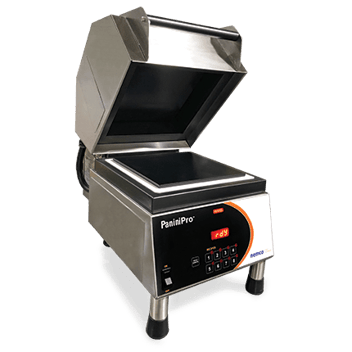 In 2014, Nemco introduced the PaniniPro High-Speed Sandwich Press. The Model 6900A combines conduction heating from aluminum contact plates with microwave energy delivered from the sides, producing a hot, toasted sandwich in about a minute. The design eliminates the protein-heating step entirely. A cold-built sandwich goes in; a finished product comes out. No intermediate transfer, no second piece of equipment, no guesswork about when the protein reaches temperature. The heating cycle handles it in a single closed operation.
How Consistency, Programmability, and Compact Footprint Work Together
When the process depends on one programmed cycle rather than multiple manual steps, consistency becomes a function of the equipment rather than the person running it. USB-programmable menu presets allow settings to be configured for specific sandwich builds, so the result repeats regardless of who is working the station.
In labor-challenged environments where training time is limited and turnover runs high, that repeatability matters. The unit itself occupies a 14½" x 26½" footprint, replacing what was previously a two-equipment setup. For operators working in tight c-store or quick-service layouts, that consolidation frees counter space for other revenue-producing programs.
Why Ease and Reliability Still Decide It in High-Volume Foodservice
In environments running hundreds of sandwiches per shift, the equipment that wins is the equipment that disappears into the workflow. The PaniniPro's cover-down operation and automatic pop-up with audible signal means operators load, press, and move on. Three plate options accommodate different sandwich programs without changing hardware. Stainless construction and non-stick contact surfaces simplify cleaning between service periods. NSF and cUL certifications confirm the unit meets commercial foodservice standards. These are not features that make headlines. They are the reasons a unit stays in rotation through years of daily use rather than getting replaced or worked around.
Frequently Asked Questions About Serving Paninis
What is a high-speed sandwich press?
A high-speed sandwich press combines multiple heating technologies in a single unit to produce hot, toasted sandwiches in significantly less time than traditional contact grills. The Nemco PaniniPro uses conduction and microwave heating together to finish a sandwich in about a minute.
How does a panini press improve foodservice speed?
By eliminating the separate protein-heating step and consolidating the process into one programmed cycle, a high-speed press removes the transfers, timing, and judgment calls that add time to each ticket.
What are the benefits of dual heating technology?
Dual heating (conduction plates plus microwave energy) heats the bread surface and the interior filling simultaneously, producing consistent results without requiring operators to pre-heat protein or manage multiple pieces of equipment.
How long does it take to make a panini with a high-speed sandwich press?
The Nemco PaniniPro produces a finished hot sandwich in about a minute. A traditional two-step workflow takes longer because it requires separate protein heating before the press cycle.
Why is consistency important in sandwich preparation?
In high-volume and high-turnover environments, consistency depends on the equipment rather than individual skill. Programmable presets ensure every sandwich meets the same standard regardless of who is running the station.
What types of businesses use commercial sandwich presses?
Sandwich shops, c-stores, coffee shops, fast-casual chains, college dining operations, and any foodservice environment running a hot sandwich program at volume.
The Same Principle, Different Problem
The PaniniPro represents the same design thinking that produced Nemco's first food-prep innovation: find the steps that slow operators down, then build them out of the process. In this case, the steps were the ones between cold protein and finished sandwich.
Explore the full PaniniPro specifications and plate configurations today!