/nemco-logo.png)
In most commercial kitchens, prep doesn’t slow down because of volume. It slows down due to friction, cleaning, maintenance, and equipment that depend too much on the operator.
In 2026, Nemco turns 50. Half a century of building commercial kitchen equipment has brought a handful of chapters that actually changed how prep works, and one of the clearest arrived in 2007, when Nemco introduced the pre-tensioned blade cartridge.
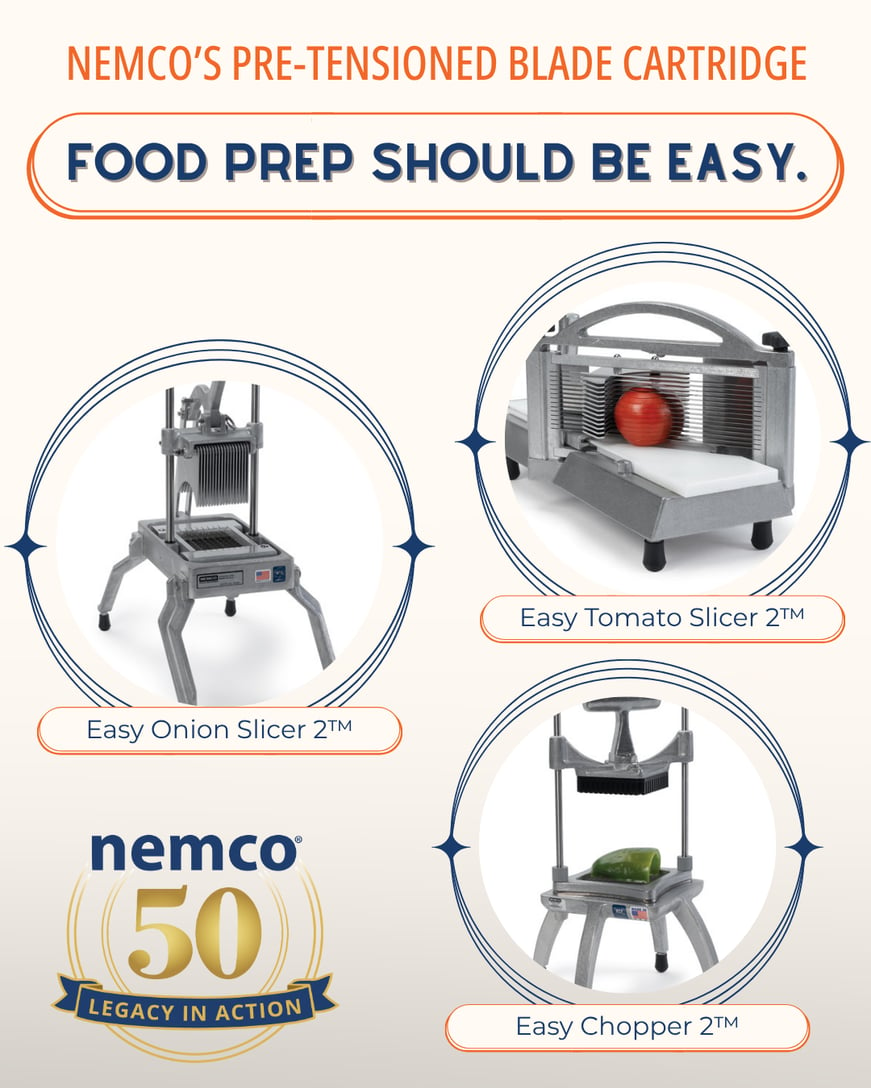
Integrated into the Easy Chopper 2, the Easy Tomato Slicer 2, and the Easy Onion Slicer 2, the cartridge did something small but structural: it removed manual blade tensioning from daily prep. Two decades later, the cartridge is standard on those units, and the step it removed is still doing work on every line that runs them.
What Prep Looked Like Before the Cartridge
Before pre-tensioning, blade tension was the operator's problem. Individual wires had to be strung and tensioned by hand, checked regularly, and re-seated after cleaning. A tensioning tool lived in a drawer. Someone had to know how to use it. On a good day, that was friction. On a bad day, with a missing tool, a rushed cleaning, or a new staffer, it meant downtime, an uneven cut, or a unit pulled from service until a manager could walk over.
The sanitation exposure was worse. Every re-tensioning puts hands on the blade assembly. Every teardown widened the window where a blade could nick, a part could go missing, or a surface could sit wet. A piece of equipment built to save labor was quietly asking for labor back.
That was the status quo on most prep lines.
How the Pre-Tensioned Cartridge Changed the Job
The pre-tensioned blade cartridge is a drop-in assembly. Blades arrive already tensioned to spec, sealed in a cartridge that locks into the unit. There is no tensioning tool. There is no hand-wire adjustment. Operators snap the cartridge in, run their prep, pull it for cleaning, and reinstall.
What used to be a skilled-labor task became a two-step motion. The cut stays consistent because the tension stays consistent. Blade life extends because the assembly is neither over- nor under-tightened in the field. Cleaning is faster because there are fewer exposed parts and no recalibration on the other side. This wasn’t just a product improvement; it changed how operators approach prep, maintenance, and consistency.
What changed for operators:
- Cleaning and maintenance dropped from a multi-step process to seconds
- Blade performance became consistent across every shift
- Equipment lasted longer by eliminating improper tensioning
- Training requirements decreased
Innovation here was simplification. Manual blade tensioning disappeared from the workflow, replaced by a cartridge that arrives ready to perform.
Why the Cartridge Matters More in 2026 than in 2007
Labor conditions always shift. When the cartridge first shipped, kitchens had deeper benches and longer onboarding windows. Today, the average new hire trains in a fraction of that time, and labor force participation continues to trend down across foodservice, with turnover being more common than not.
When labor is tight or uncertain, technology and innovation will often fill in the gaps. This is certainly true with the pre-tensioned blade cartridge. A blade assembly that stays tensioned through a shift is one less thing a new staffer can get wrong. It is one less place a manager has to catch an issue. It is a labor multiplier working quietly in the background.
Today’s kitchens don’t have time for complexity. With higher turnover and less training time, equipment has to work the same way every time, regardless of who’s using it.
What Nemco Has Been Building Toward for 50 Years
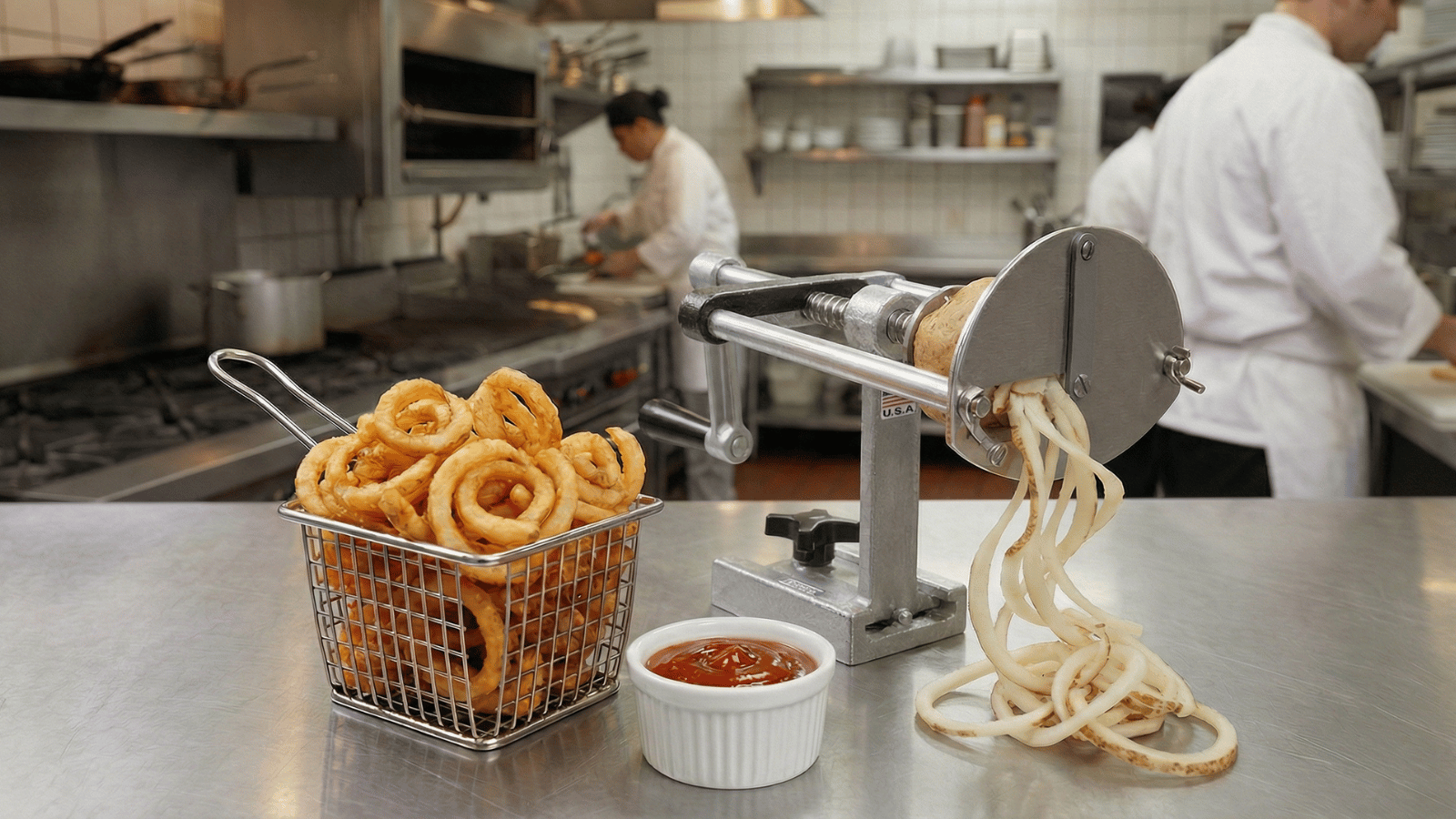
 Nemco has spent fifty years on a single discipline: in every prep workflow, there is a step that does not need to be there, and Nemco's job is to find it. The Spiral Fry took a transfer out of presentation. The pre-tensioned cartridge eliminated the need for manual adjustment during maintenance. The pattern is consistent. An operator works through a task in a real kitchen, Nemco watches for parts that waste motion or invite error, and the next iteration simplifies those parts.
The pre-tensioned cartridge is one example. It's representative of the same questions that shape every unit Nemco builds: What part of this workflow does not need to be here? Ed Neidhart asked that question when he founded the company in 1976. Nemco still asks it today.
FAQs: What Operators Ask About Pre-Tensioned Prep Equipment
Does a pre-tensioned blade cartridge actually save prep time?
Yes. Removing blade tensioning, checking, and re-seating from the daily workflow cuts several minutes out of setup and teardown per unit. On a line running multiple cuts per shift, that compounds across the day.
How does the cartridge affect cleaning and sanitation?
The cartridge pulls out of the unit as a single assembly and goes to the sink or sanitizer as one piece. Fewer exposed blades and no recalibration step shrink the window a unit sits out of service, which tightens sanitation without adding time.
Does it extend equipment life?
In most operating conditions, yes. Blades tensioned to spec at the factory wear more evenly than field-tensioned blades, and the cartridge design protects the frame and mounts from the stress of repeated hand-tensioning.
Is the cartridge compatible with existing Nemco prep equipment?
Replacement blade and holder cartridge assemblies are available for Easy Chopper 2 & 3, Tomato Slicer 2, Onion Slicer 2, Roma Tomato Slicer, LettuceKutter, and FryKutter units currently in service. Compatibility depends on the specific model and generation. Operators should reference the parts catalog or contact their dealer to confirm fit before ordering.
What should operators look for when evaluating prep slicers in 2026?
Three things, in order: how many steps the unit takes out of a prep workflow, how well it handles being cleaned and reassembled by a staffer who was hired last week, and how long the blade stays true under real-kitchen conditions.
Across 50 years, the cartridge is one answer to one question. The question has not changed: what can we stop asking operators to do?