/nemco-logo.png)
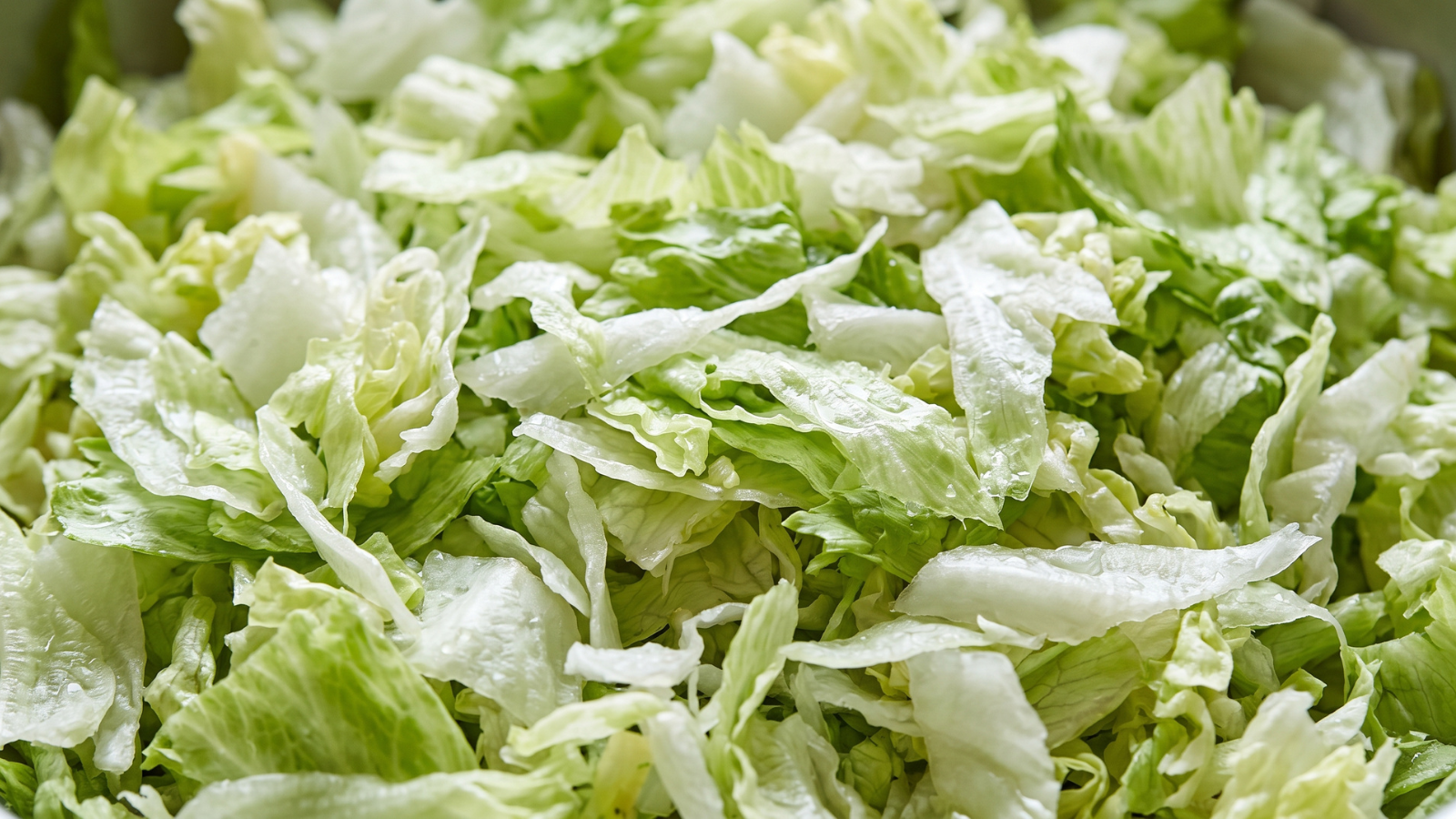
In a lot of kitchens, the produce decision is already made by the time anyone picks up a knife. There is a case of bagged chopped lettuce on one pallet and a crate of whole heads on the other, and whichever one goes into the walk-in settles how much of the prep happens under your own roof.
Starting with whole heads puts sourcing, washing, trimming, portion size, and the timing of the cut back in the operator's hands. What makes that choice practical now is throughput. A commercial lettuce cutter that clears a case of cored lettuce in under three minutes means the control no longer costs a shift's worth of labor.
What pre-cut produce takes off the table
A bag of chopped lettuce arrives finished. Sourcing, washing, trimming, portion size, and the timing of the cut were all settled before the case reached your dock, by people doing careful work you never see. That is the appeal of it, and it is also the part operators have been weighing more carefully in recent conversations around produce sourcing.
Whole heads move those decisions back into the kitchen. You choose the grower or the distributor. You decide how many outer layers come off before anything else happens. You set the cut size to the application, anywhere from half-inch squares to one-inch by two-inch rectangles. And you know when the lettuce was cut, because it was cut on your line, on your clock.
Why bagged lettuce became standard
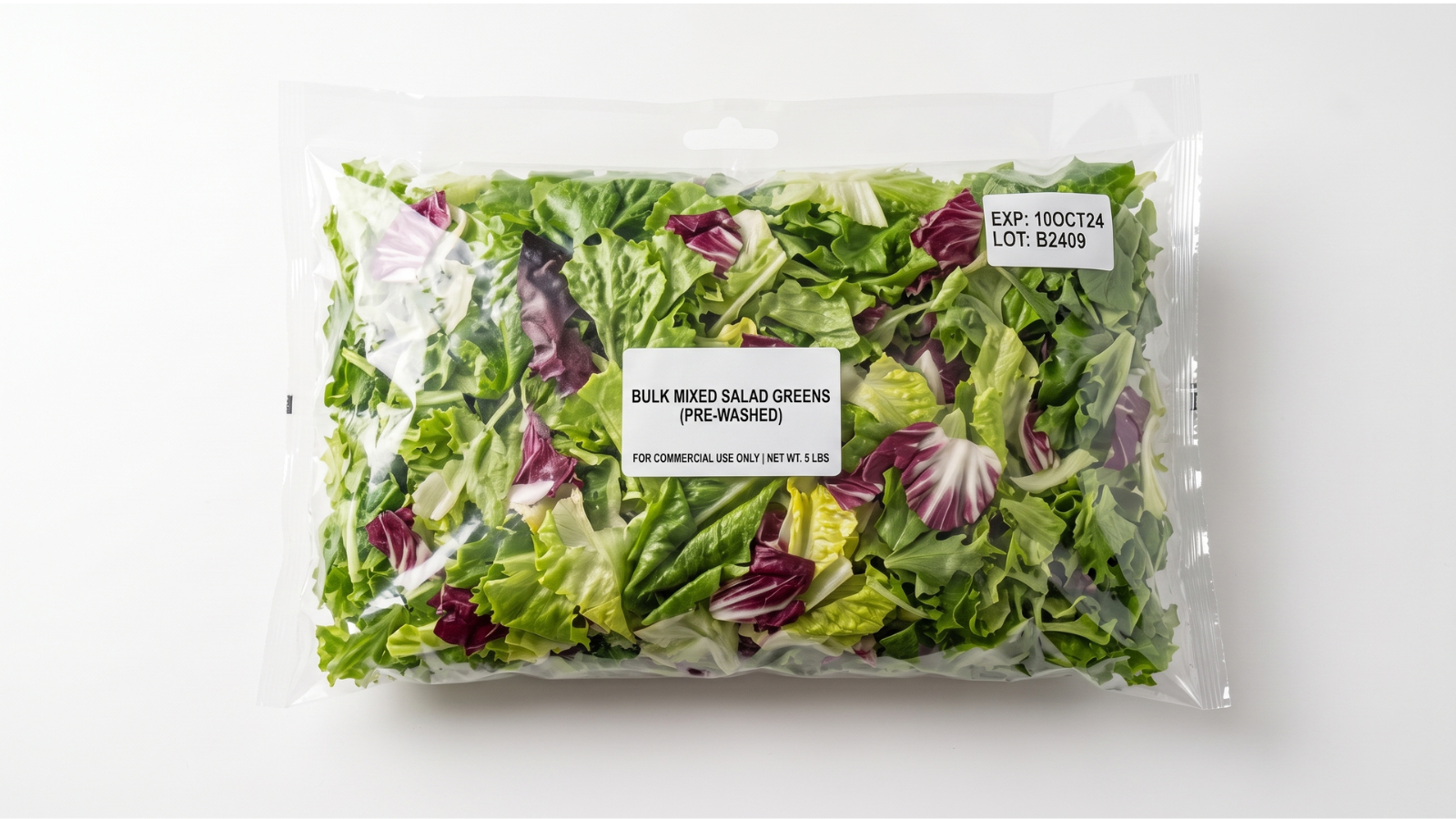
Bagged chopped lettuce became standard for a practical reason. Cutting lettuce by hand is slow. It ties up a person and a board for a long stretch of the morning, and the result changes with whoever is holding the knife.
The objection also lands differently by segment. A hospital or long-term care kitchen is working inside diet orders and documentation on top of prep. A chain has to hold the same cut across every unit. A grocery or c-store deli runs prep in a footprint the size of a closet. In each of those, labor is the constraint around which the whole day is built.
What three minutes a case actually buys
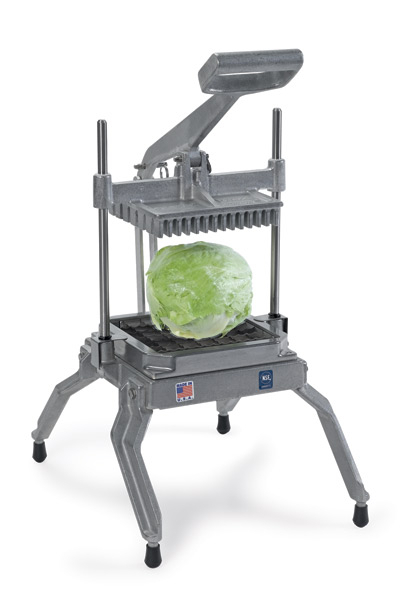 The Easy LettuceKutter™ cuts a case of cored lettuce in less than three minutes. That figure usually gets read as a speed claim. It is more useful to read as a budget item.
When the cut takes minutes instead of most of a prep shift, the labor that used to go into cutting is free to be reallocated elsewhere. The cut stops being the expensive part of the job. What is left is the handling that happens before it, and that handling is where an experienced prep cook earns the wage.
Throughput is also what makes the cut repeatable. Interlocked blades that do not flex produce the same square all the way through the case, which is the difference between a spec a chain can hold across units and a cut that depends on who came in that morning.
Where the recovered time goes
Start by taking the first couple of layers off the head. Those outer leaves have taken the most handling between the field and your walk-in, and pulling them costs almost nothing in time or yield.
Then wash properly, paying attention to soil, field debris, and transit residue, rather than a quick pass under the tap on the way to the board. Then look at what you have. The core, the ribs, the cut ends, and any head that came in bruised or packed hard. A prep cook who has time to look at product catches things a schedule never catches.
None of this is exotic. It is ordinary prep discipline, and it gets skipped for one reason, which is that the clock runs out before anyone gets to it.
Cut Quality, Shelf Life, and Plate Appearance
Scalloped blade edges cut through the leaf rather than pressing through it. Less crushing and bruising at the cut line means the lettuce holds its color longer before it starts to brown.
That shows up twice. Product that browns slower is product that does not go in the bin at the end of the week, which is the yield argument. And lettuce cut cleanly looks better on the plate and on the salad bar, where a customer forms an opinion about the food before tasting any of it.
Cleaning the Cutter Itself
A hard-to-break-down cutter is one that gets wiped when it should be washed. The Easy LettuceKutter is the only lettuce cutter on the market whose blade and pusher come apart for cleaning without tools. One pin releases the pusher block.
That is Nemco's usual approach to a problem, which is to remove a step rather than add a feature. A part that needs a wrench gets cleaned when there is time. A part that comes off in a second gets cleaned every shift, and a cleaning routine that survives a bad week is the only kind worth writing down.
Fresh Prep as a Standing Practice
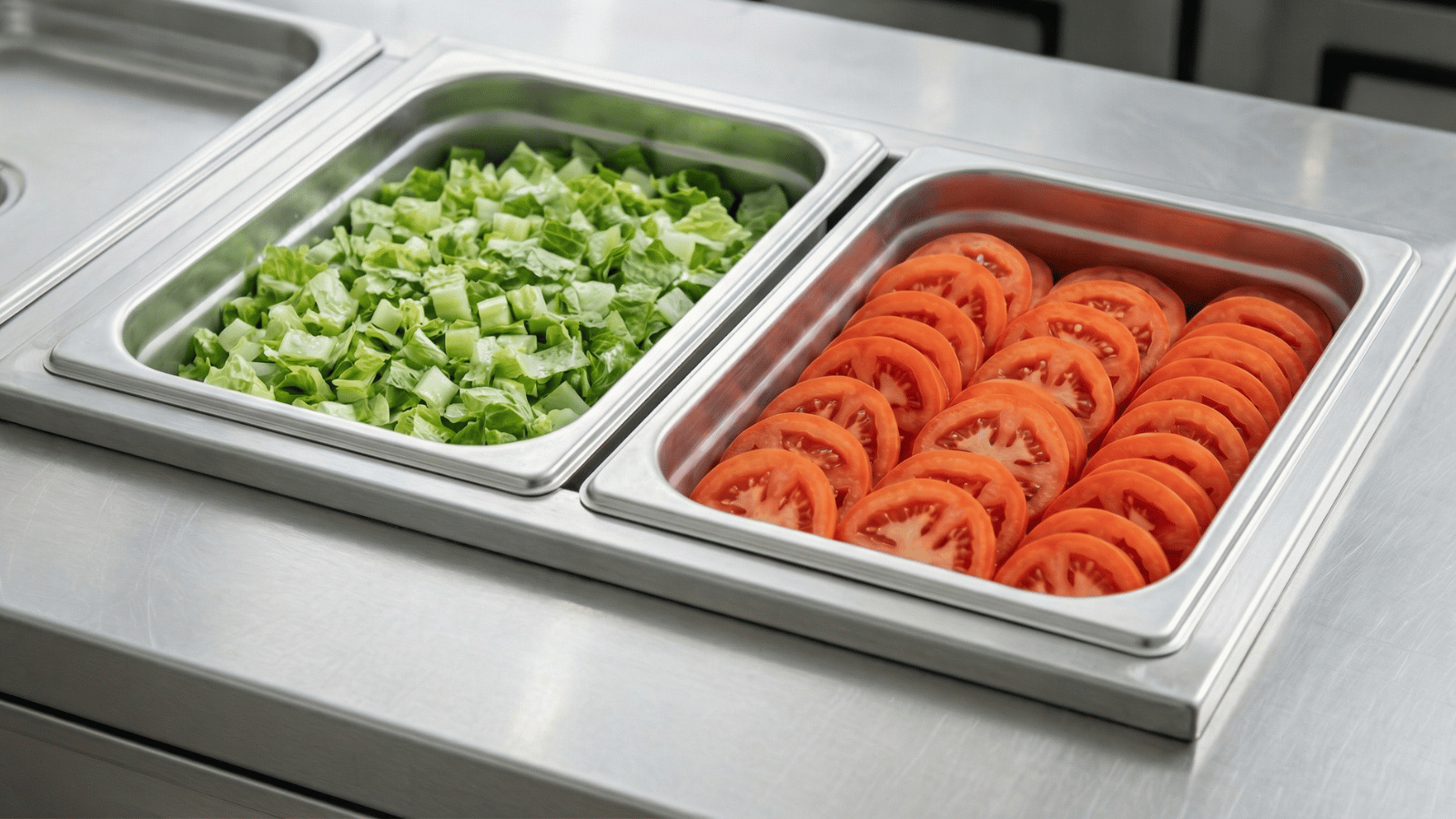
Lettuce is usually where this starts, because it is a high-volume cut on most prep tables and the one most likely to arrive already finished. The same reasoning applies to tomatoes, onions, and the rest of the board.
Fresh prep holds up as a standing practice, decided item by item as the throughput makes each one possible. For lettuce, the throughput is already there. What is left is a decision about where the morning goes.
FAQ About Commercial Lettuce
How long does it take to cut a case of lettuce in-house?
The Easy LettuceKutter (55650) cuts a case of cored lettuce in less than three minutes. It processes one whole head of cored lettuce at a time, so the lettuce needs to be cored before it goes into the unit.
Is cutting lettuce in-house realistic for a kitchen that is short on labor?
Throughput is what answers that. When a case takes under three minutes rather than most of a prep shift, the time freed up can go to washing, trim and inspection instead of the cut itself.
What cut sizes does the Easy LettuceKutter produce?
Half-inch, three-quarter-inch, one-inch, and two-inch squares, one-inch by two-inch rectangles, and three-eighths-inch and half-inch slices. Blade assemblies are replaceable and need no tensioning, so the cut size changes with the assembly.
How does the Easy LettuceKutter get cleaned?
The blade and pusher separate without tools, which is unique to this unit among lettuce cutters. One pin releases the pusher block, so a full breakdown fits inside a normal cleaning routine rather than waiting for a slow day.
How can I learn more about the Easy LettuceKutter?
Visit the product page below.