/nemco-logo.png)

Here are 5 quick c-store lessons for school foodservice success.
1. Make School Meal Creativity a Priority
Pre-pandemic format creativity, like the food-court foray in Florida’s Palm Beach County schools in 2017, or the fast-casual pilot flown across several Boston schools that same year, are noble efforts for a number of reasons.
But, without the private investment support or, as already mentioned, the labor pool, creativity for most school foodservice directors has to remain relegated to the menu.
C-stores began crossing this bridge several years ago, compelled to emulate rival restaurants for their menu innovation, which includes more fresh-prepared options, following industry trends—like dabbling in global flavors, for example—and introducing limited-time offer items (LTOs).
Where c-stores have excelled—lately, without much choice in the face of spiking gas prices—is merging these fresh ideas with grab-and-go infrastructure (speed cooking, food holding, packaging, etc.) to deliver something unique.
Schools can take a page from this textbook, going so far as to explore new to-go recipe development or even LTO-like seasonal items that students can’t find anywhere else.
They can also take inspiration directly from retail foodservice authorities like FSD.
Before this sounds too complicated, keep reading.
2. Keep School Menus Simpler and More Flexible
Schools have suffered the supply chain disaster as much as anyone.
When necessity is the mother of invention, resourcefulness in this environment can really pay dividends.
Foodservice operations everywhere, including c-stores, have been streamlining menus to keep inventory costs down and make meal prep easier for thin kitchen-staff rosters under high-turnover stress.
The current supply chain calamity has upped the stakes. But it stands to make survivors stronger and sharper.
In schools, it comes down to adding different herbs or sauces to standard items like chicken strips, using snack foods in new ways (pretzels and corn chips are quite versatile), and blurring the daypart line with twists like all-day breakfast.
3. Master Cafeteria Food Merchandising
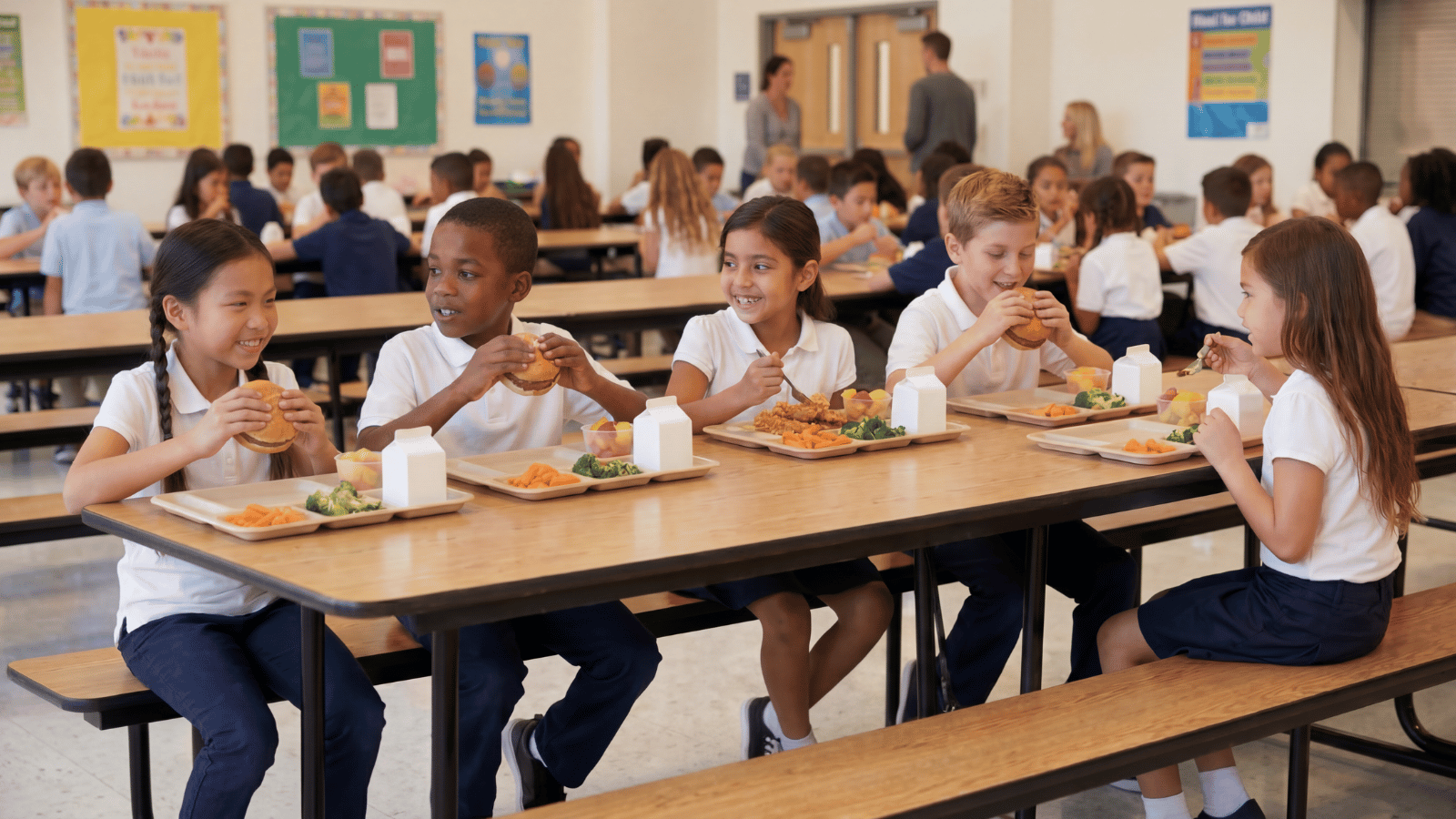
Given the tight window for school dining, typically 25 to 30 minutes, most cafeterias have already adopted the c-store’s grab-and-go model.
The next step in food merchandising is to go from functional to strategic—to step up from self-serve accessibility, durability and ease of cleaning, which are all important, to other attributes that move product.
Those that promote food presentation are big; elements such as tempered glass that doesn’t scratch or interior lighting that showcases the food. If the vessel looks like an underachiever, the food inside will too.
Other attributes to consider are built-in humidifiers that preserve freshness, as well as temperature, to optimize food quality.
And custom graphics, whether designed to sales-pitch the food inside or simply shout school spirit, can be just the eye-catching element that leads to an impulse sale.
4. Emphasize Cafeteria Food Customization
Closely related to numbers 1 and 2 is this factor that leverages sauces, spices and garnishes to give students more command over what they get to eat.
Whether offered behind the counter or in a self-serve capacity, customization has proven a big win for c-stores. In fact, according to leading foodservice research firm, Datassential, “66% of c-store consumers say customization motivates them to visit a c-store over a competing foodservice location.”
Condiments are a great way to accommodate this at a relatively low cost.
5. Do Your School Foodservice “Market” Research
Finally, while a school’s market is predetermined and the cafeteria isn’t in the business of growing the business, there are still cost and customer-satisfaction benefits derived from market research that can serve a school and its foodservice operation extremely well.
While staying within the parameters of nutrition guidelines, sampling students for likes, dislikes and how they prefer to “do business” can improve inventory management, lunchtime throughput efficiency and the school’s brand image (which, yes, actually can grow the business).