/nemco-logo.png)

When a commercial conveyor toaster can't sustain output during peak service, it becomes the bottleneck that slows everything around it. Breakfast compresses demand into a narrow window, leaving little room to absorb delays. Hotels, cafeterias, and institutional kitchens all face the same surge of guests expecting fast, consistent service within a limited timeframe.
Toast supports nearly every plate or self-serve station in that environment, creating sustained pressure on the toaster to perform without interruption. Whether it's a hotel buffet, a conference setup, or a back-of-house prep station working ahead of service, the constraint is the same. For many operators, breakfast directly affects both revenue and guest perception, making reliability during this period critical.
When a Conveyor Toaster Starts Controlling the Line
A commercial conveyor toaster should operate in the background, allowing service to move at a steady pace. When it cannot sustain throughput, it becomes the point at which everything else waits.
This shift rarely happens all at once. Performance may appear stable during slower periods, but during peak demand, gaps emerge. Output slows, recovery time increases, and consistency begins to vary. Once that happens, the toaster no longer supports production; it dictates the line's speed.
Operators recognize the issue through what happens during service. When bread has to be run through more than once to reach the right level, it increases dwell time at the station. Guests pause rather than moving through, and self-serve areas begin to fill up as more people wait.
In buffet and conference environments, this often results in a visible break in the continuous flow. In back-of-house prep, it slows batch production and can delay the entire service. These moments may seem minor on their own, but they repeat across every order during peak periods.
Throughput and Consistency Set the Pace
Two factors determine whether a conveyor toaster keeps up with demand: how much it can produce continuously, and whether each slice meets expectations on the first pass.
High-volume environments require steady output under pressure. When volume drops or results vary, reprocessing increases. That extends time at the station and adds pressure to the surrounding workflow. When production and quality align, the toaster supports service. When they don't, it becomes a constraint.

How Delays Extend Beyond One Station
A slow toaster affects more than the immediate area around it. As guests wait, lines extend into adjacent sections of the operation. At buffets or conference setups, this disrupts the intended flow of the line. In back-of-house environments, including at QSRs that serve breakfast meals, it forces adjustments in prep timing or slows plated service.
Staff often shift their attention to manage the bottleneck, diverting focus from other responsibilities. What begins as a delay at a single piece of equipment spreads across the operation, reducing overall efficiency.
What to Evaluate in a Commercial Conveyor Toaster
Operators should focus on how equipment performs during sustained demand rather than relying on basic specifications. The unit must maintain volume during continuous use, deliver consistent results without requiring repeat passes, and operate reliably throughout peak service periods.
These factors determine whether the toaster keeps pace with the operation or slows it down. Not all conveyor toasters are built for high-volume use. Some are designed for intermittent demand and struggle to maintain performance under continuous load.
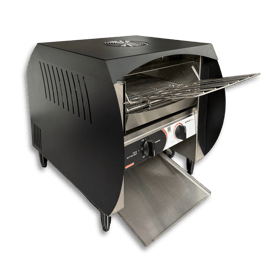 Why Design Differences Matter
Conveyor toasters engineered for sustained output address the root causes of breakfast bottlenecks rather than just the symptoms. Advances in heating control and conveyor design have improved stability during long service windows, helping operators maintain speed and quality without manual intervention. Evaluating these design differences is what separates equipment that supports high-volume service from equipment that limits it.
Keep the Line Moving by Removing the Constraint
Breakfast service depends on steady flow. When one piece of equipment cannot keep up, the entire operation adjusts around it. Addressing toaster performance removes a common constraint and helps restore consistency during peak demand.
When throughput and output align with volume, service moves as intended, staff remain focused on their roles, and guests move through without unnecessary delays.
Frequently Asked Questions About Commercial Conveyor Toasters
What causes bottlenecks during breakfast service?
Bottlenecks form when equipment cannot keep up with peak demand. In breakfast operations, a slow commercial conveyor toaster creates queues that delay service and disrupt flow.
How many slices per hour should a commercial conveyor toaster produce?
An efficient commercial conveyor toaster should produce at least 300 slices per hour to support high-volume breakfast service without creating delays.
Why does toast need to go through a conveyor toaster twice?
This typically indicates inconsistent heating or insufficient power, preventing the bread from achieving the desired result in a single pass.
What should operators look for in a commercial conveyor toaster?
Operators should evaluate throughput capacity, output consistency, and the ability to maintain performance during peak service periods.